Schedule your initial consultation today and start your journey towards a pain-free, healthier smile. Contact us now!
Temporomandibular Joint Dysfunction (TMD), commonly known as TMJ disorder, is a complicated group of conditions, often characterized by pain and limited mobility in the jaw and surrounding tissue.
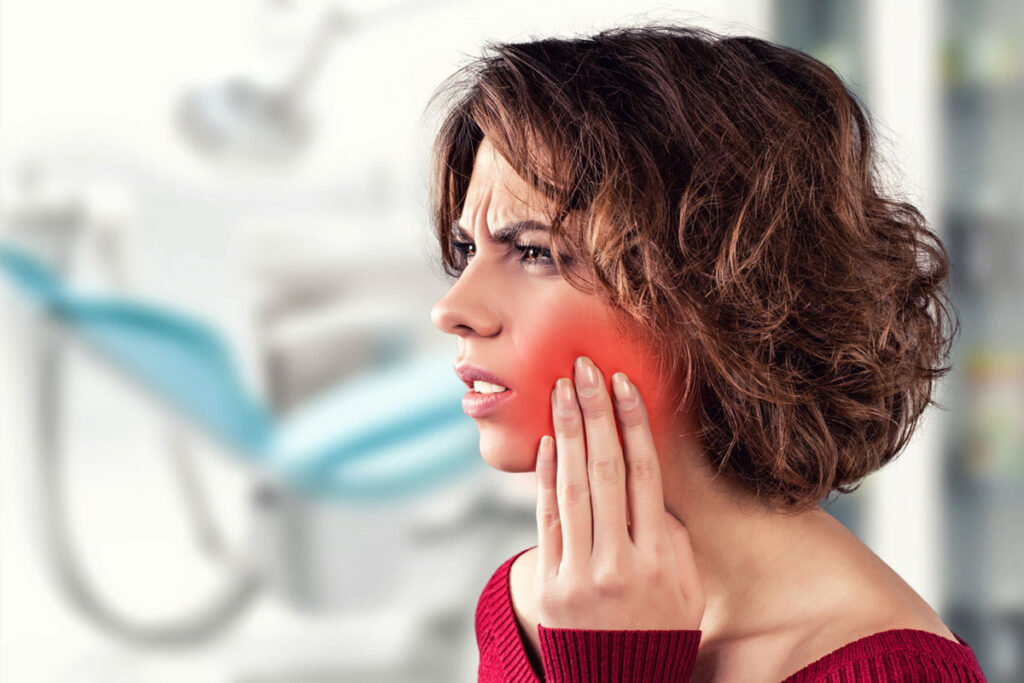
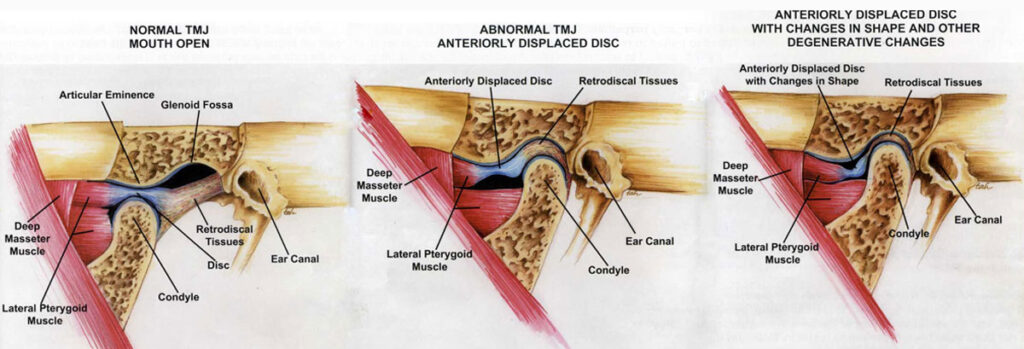
The temporomandibular joint (TMJ) is one of the most important joints in your body. It is the hinge joint that connects the lower jaw (mandible) to the temporal bone of the skull, which is immediately in front of the ear on each side of your head. You can actually feel it if you place your finger in front of your ears and open and close your jaw. The joints are flexible, allowing the jaw to move smoothly up and down and side to side and enabling you to talk, chew, and yawn. Muscles attached to and surrounding the jaw joint control the position and movement of the jaw.
The cause of TMD is not clear, but dentists believe that symptoms arise from problems with the muscles of the jaw or with the parts of the joint itself. Injury to the jaw, temporomandibular joint, or muscles of the head and neck -such as from a heavy blow or whiplash-can cause TMD.
Because many other conditions can cause similar symptoms to TMD -including a toothache, sinus problems, arthritis, or gum disease – Dr. David Michaels, your North York dentist will conduct a careful patient history and physical exam to determine the cause of your symptoms before making any treatment recommendations.
Learn about Temporomandibular Joint Disorder.
TMJ stands for the Temporo Mandibular Joint, which is the joint itself.
TMD (Temporomandibular Disorder) is the term for the problems or symptoms affecting the joint and muscles. When people say "I have TMJ," they usually mean they have TMD.
Most treatments are non-surgical and conservative, including self-care (soft diet, heat/ice), physical therapy, oral splints or mouthguards, medications (pain relievers, muscle relaxants), and stress management.
No, surgery is generally a last resort. It is typically only considered for severe cases that involve structural joint damage and have not responded to any other conservative treatments.
They are a common, non-invasive treatment often used to prevent teeth clenching/grinding (bruxism) and help relax the jaw muscles, reducing pain. Their effectiveness can vary, and they must be properly fitted and monitored by a professional.
Physical therapy is very important. It involves exercises to stretch and strengthen the jaw muscles, improve posture, and increase the jaw's range of motion. Techniques like massage, moist heat, and TENS (transcutaneous electrical nerve stimulation) may also be used.
Initial diagnosis and treatment often involve a general dentist or primary care physician. They may refer you to specialists such as an orofacial pain specialist, oral surgeon, or physical therapist.
n many cases, yes, especially when the underlying cause (like clenching or poor posture) is identified and corrected with treatment. For some people, it is a chronic condition that requires long-term management to keep symptoms controlled.



Monday: 9:00am to 6:00pm
Tuesday: 9:00am to 6:00pm
Wednesday: 9:00am to 5:00pm
Thursday: Closed
Friday: 9:00am to 6:00pm
Saturday: 8:00am to 3:00pm (Alternating)
Sunday: Closed


Trustindex verifies that the original source of the review is Google. Dr Michaels personal touch to his craft is always so welcoming. Aside from his professional skills, he is a fantastic Dentist.Posted onTrustindex verifies that the original source of the review is Google. I’ve been going to Dr.Ng since July 2025, she’s super personable and professional. I’m super happy with this dentistry and my dentist!Posted onTrustindex verifies that the original source of the review is Google. I love Dr. Michael, so informative, so patient and so good at his craft.Posted onTrustindex verifies that the original source of the review is Google. Amazing my daughter are so happy with the dentistPosted onTrustindex verifies that the original source of the review is Google. Dr.Micheal is absolutely amazing at what he does and Dorina is fabulous. Always leave the office very happy.Load more